Asbestos Testing in Kentucky
Kentucky’s own asbestos-in-the-home page is unusually direct: removal and disposal from single-family homes or apartments of four or fewer units is not regulated under Kentucky law — but commercial buildings, schools, and larger apartments are, and Jefferson County has additional restrictions.
Agency: Kentucky Energy and Environment Cabinet, Division for Air Quality — Asbestos (401 KAR 58:005, 58:025, 58:040)
Official program page
The Kentucky Energy and Environment Cabinet’s asbestos page states that asbestos removal and disposal from single-family homes or apartments of four or less units is not regulated under Kentucky law. It still advises hiring a certified asbestos abatement contractor when the material may crumble. If the project involves a commercial or school building, or an apartment dwelling with more than four units, it is subject to federal and state asbestos regulations, including a thorough survey and, in many cases, a 10-working-day notice through eForms (Asbestos Notifications).
The homeowner and small-apartment exemption
Kentucky’s Cabinet states that asbestos removal and disposal from single-family homes or apartments of four or less units is not regulated under Kentucky law. Undisturbed material can be safely maintained and poses little risk, but crumbling, renovation, demolition, or aging can release fibers. The Cabinet still says it is advisable to seek help from a certified asbestos abatement contractor when removing material that may crumble (Kentucky EEC Asbestos).
When a thorough survey is required
For a commercial or school building, or an apartment dwelling with more than four units, the Division for Air Quality says to perform a thorough asbestos survey before demolition or renovation. The accreditation page adds that the federal NESHAP, as administered in Kentucky, requires a thorough survey prior to any demolition or renovation of a facility by an accredited inspector (DAQ Notifications; Individual Accreditation).
Demolition notices versus renovation notices
Demolition notices go to the Division at least 10 working days before work begins, through eForms (Form ID 70), whether or not the survey finds regulated asbestos-containing material (RACM). If no RACM is found, no asbestos-specific work practices are required, but the waiting period still applies. For renovation, no notice and no asbestos-specific work practices are required if the survey finds no RACM, or finds less than 160 square feet, 260 linear feet, or 35 cubic feet of RACM; above those amounts, the same 10-working-day eForms notice is required and a certified entity must remove and dispose of the material (DAQ Notifications).
Who must be accredited
Individuals who perform regulated asbestos activities must be licensed by the Division as an inspector, management planner, project designer, abatement supervisor, or abatement worker, and must have the license on hand. Kentucky does not require a license to perform air monitoring. A license expires when the proof of training expires. Initial inspector (and supervisor, project designer, or management planner/inspector) accreditation is $100; renewal is $50 if the license has not been expired more than one year (Individual Accreditation). Company certification is a separate program under 401 KAR 58:040 (Kentucky EEC).
How to check a Kentucky asbestos license
Look up accredited individuals on the Cabinet’s eSearch Manage a License page — filter the license type and set the status to active. Certified companies are listed on the eSearch Active Companies report. The accreditation page notes that eSearch is for checking status, not for renewing a license (Individual Accreditation; Kentucky EEC).
Jefferson County and other agencies
The Cabinet warns that additional restrictions may apply to asbestos removals in Jefferson County and tells people to contact the Louisville Metro Air Pollution Control District directly. The Kentucky Occupational Safety and Health Program and the Kentucky Division of Waste Management also regulate worker safety and proper disposal (Kentucky EEC).
Kitchen and bath remodels in a Kentucky home
If you own a single-family home, or an apartment building with four or fewer units, Kentucky law does not regulate the removal and disposal itself (Kentucky EEC). That is not the same as saying the work is risk-free. Kitchen and bath remodels commonly disturb floor tile, sheet flooring, joint compound, and textured coatings — materials EPA says you cannot identify by looking, and that a trained, accredited professional should sample (EPA — Protect Your Family).
The Cabinet’s own advice for homes is to leave undisturbed material alone and to use a certified contractor when you do remove material that may crumble. For any apartment building with more than four units, the project is in the regulated category: a thorough survey by an accredited inspector comes first (DAQ Notifications; Individual Accreditation).
Boilers, pipe wrap, and other friable insulation
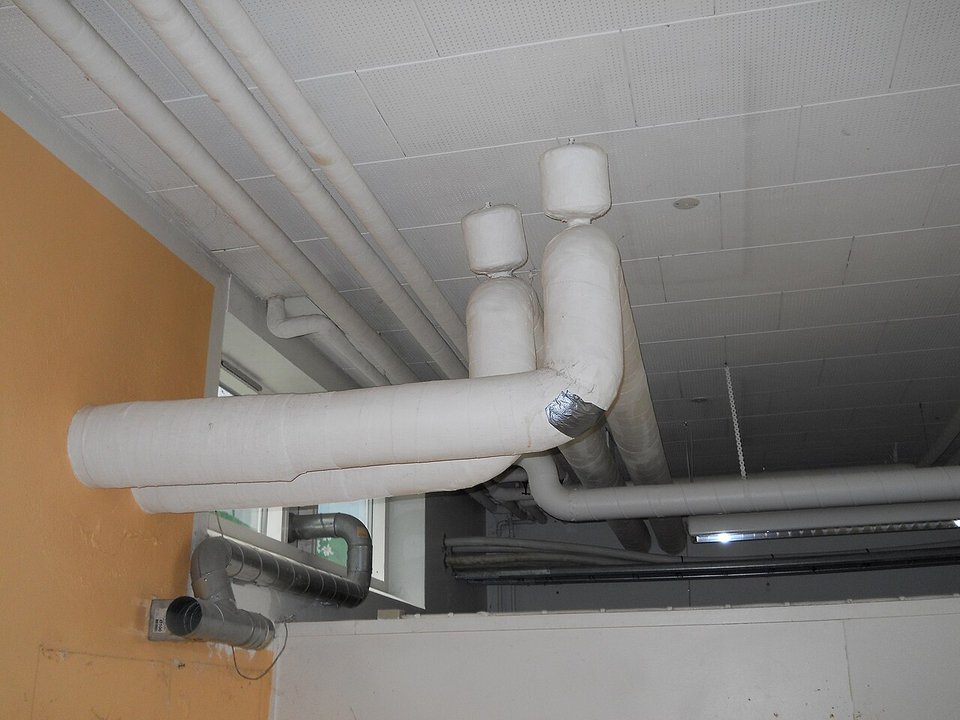
Pipe insulation and boiler lagging are classic friable materials — RACM, in Kentucky’s definition, includes friable asbestos and nonfriable materials that may be rendered friable by the work (DAQ Notifications). On a regulated building, a thorough survey has to find this material before demolition or renovation. If the amount of RACM is above 160 square feet, 260 linear feet, or 35 cubic feet, a certified entity must remove and dispose of it, and the 10-working-day notice applies for both demolition and renovation (DAQ Notifications).
Below that amount on a renovation, Kentucky does not require a notice, but it still recommends that a certified entity perform the removal. On an exempt home, the Cabinet’s advice is the same in spirit: use a certified contractor if the insulation may crumble (Kentucky EEC).
Roofing, siding, flooring, and mastic
Nonfriable flooring, mastic, roofing, and cement siding often stay intact for decades and then become a problem when they are sanded, cut, or broken up. On a regulated Kentucky project, the survey is what decides whether those materials are RACM and whether a certified entity must take them out before demolition. Kentucky recommends certified removal even when the amount is under the renovation notification threshold (DAQ Notifications). EPA’s household guidance is to leave undamaged material alone if you will not disturb it (EPA — Protect Your Family).
If testing finds asbestos, and clearance afterward
A positive survey on a regulated building does not always mean a 10-day notice. For renovation, notice and certified removal are required only above the 160 / 260 / 35 RACM thresholds; for demolition, the notice is required either way, and certified removal is required above those same thresholds (DAQ Notifications). File the notice in eForms as Form ID 70.
Clearance air testing is a gap in Kentucky’s licensing scheme: the Division says Kentucky does not require a license to perform air monitoring (Individual Accreditation). That does not mean air testing is unnecessary. It means you should still ask who will collect clearance samples, what method they will use, and how that person is qualified — and use our clearance testing guide and air testing guide to frame those questions. Schools also have a separate AHERA track under 401 KAR 58:005 and 58:010 (Kentucky EEC).
Buyers, sellers, and landlords
Apartments of four or fewer units sit on the same unregulated side of Kentucky law as single-family homes; buildings with more than four units do not (Kentucky EEC; DAQ Notifications). A landlord planning a building-wide floor or boiler project in a larger building should expect an accredited inspector’s survey and, if thresholds are met, a certified contractor and a 10-working-day notice. Kentucky does not, on the pages fetched for this guide, impose a special disclosure form on home sales; EPA still recommends testing before you disturb suspect material, and leaving intact material alone (EPA — Protect Your Family).
Common asbestos materials checklist
EPA and state agencies list these as places asbestos may be found. Checking a box does not mean the material in your building contains asbestos — only a laboratory analysis can determine that. Use this list to brief a licensed inspector, then request a match below.
Sources: EPA — Learn About Asbestos (where asbestos may be found); EPA — Protect Your Family; Maine DEP inspection FAQ and Rhode Island homeowner asbestos page, cited on those state pages.
0 material types selected.
A licensed inspector can sample the items you care about and send them to an accredited lab. We are an educational match service, not a testing company.
Check any materials you are worried about. A short summary and match button will appear here.
Do I need asbestos testing in Kentucky?
Answer three questions. The result cites EPA’s “don’t disturb it — use a trained and accredited professional” guidance, plus this state’s official rules. It is educational, not a legal determination.
If you are planning to remodel, do not assume the work is risk-free. EPA’s homeowner guidance says remodeling can disturb building materials and that a trained and accredited asbestos professional should take samples for analysis. EPA also says taking samples yourself is not recommended, because sampling done incorrectly can be more hazardous than leaving the material alone.
Federal Asbestos NESHAP rules require a thorough inspection where demolition or renovation will occur at a facility — structures, installations, and buildings, excluding residential buildings that have four or fewer dwelling units. Any demolition or renovation at an institutional, commercial, or industrial building is regulated; at a minimum the thorough inspection requirement applies. The owner or operator must notify the delegated agency (often the state) before any demolition, and before renovations of buildings that contain a threshold amount of regulated asbestos-containing material. NESHAP does not require regulated ACM to be removed before demolition or renovation if the total amount to be removed or disturbed is less than 260 linear feet, 160 square feet, or 35 cubic feet. Houses demolished as part of a commercial or public project are not treated as exempt. Your state can be stricter than this federal floor — read the state notes below.
In Kentucky, a commercial or school building, or an apartment with more than four units, needs a thorough survey by an accredited inspector before demolition or renovation. Single-family homes and apartments of four or fewer units are not regulated for removal and disposal under Kentucky law, though the Cabinet still advises a certified contractor if material may crumble (DAQ Notifications; Kentucky EEC).
EPA says that if building materials in your home are not damaged and will not be disturbed, you do not need to have the home tested for asbestos. Material that is in good condition and will not be disturbed (by remodeling, for example) should be left alone.
For an owner-occupied home, start with EPA’s rule of thumb: leave undamaged material alone, and use a trained and accredited professional if you will remodel or if material is more than slightly damaged (Protect Your Family from Exposures to Asbestos). State licensing, inspection, and notification rules can still apply when a contractor does the work or when you renovate — check your state page.
Kentucky does not regulate asbestos removal and disposal from single-family homes or apartments of four or less units. The Cabinet still says it is advisable to use a certified abatement contractor when removing material that may crumble (Kentucky EEC).
Rental housing and apartments are often treated more strictly than an owner-occupied single-family home. Landlords, property managers, and contractors more often need a licensed inspector and a licensed abatement contractor. OSHA regulates asbestos in construction and general industry; Maine DEP notes that OSHA rules apply whenever an employer/employee relationship exists. Read your state’s rental and multi-unit notes on this page.
Apartments of four or fewer units are treated like single-family homes under Kentucky law. An apartment dwelling with more than four units is a regulated project: thorough survey first, and often a 10-working-day eForms notice (Kentucky EEC; DAQ Notifications).
EPA’s Asbestos NESHAP page states that any demolition or renovation operation at an institutional, commercial, or industrial building is regulated, and that at a minimum the thorough inspection requirement applies. Schools have extra duties under AHERA: inspections and response actions must be done by professionals trained under EPA’s Model Accreditation Plan, and school bulk samples and TEM clearance air samples must go to a NIST NVLAP-accredited laboratory. EPA also recommends accredited labs for non-school buildings.
Commercial and school buildings in Kentucky need a thorough survey by an accredited inspector. Demolitions are noticed 10 working days ahead even if no RACM is found; renovations need that notice only above 160 square feet, 260 linear feet, or 35 cubic feet of RACM (DAQ Notifications).
EPA says asbestos-containing materials that are not damaged or disturbed are not likely to pose a health risk, and that the best step is usually to leave material alone if it is in good condition. Do leave undamaged asbestos-containing materials alone, and take every precaution to avoid damaging them.
If you suspect a material contains asbestos, EPA says not to touch it. Look for signs of wear or damage such as tears, abrasions, or water damage. Damaged material may release fibers, especially if it is hit, rubbed, handled, or exposed to vibration or airflow. If the material is more than slightly damaged, or you are going to make changes that might disturb it, repair or removal by a trained and accredited asbestos professional is needed.
EPA’s homeowner don’ts include: don’t dust, sweep, or vacuum debris that may contain asbestos; don’t saw, sand, scrape, or drill holes in asbestos-containing materials; and don’t use abrasive pads or a power stripper on flooring that may contain asbestos.
Need testing in Kentucky? Tell us your ZIP and test type and we will match you with a licensed asbestos professional.
Get Matched With a Licensed Tester — FreeKentucky asbestos testing FAQ
Do Kentucky homeowners need an asbestos inspection before remodeling?
Removal and disposal from a single-family home or an apartment building of four or fewer units is not regulated under Kentucky law. The Cabinet still advises using a certified contractor when material may crumble, and EPA recommends professional sampling before you disturb suspect material. Source: Kentucky EEC; EPA — Protect Your Family.
When is a thorough asbestos survey required in Kentucky?
Before demolition or renovation of a commercial or school building, or an apartment dwelling with more than four units, by an accredited inspector. Source: DAQ Notifications; Individual Accreditation.
Do I have to notify the state if a Kentucky demolition survey finds no asbestos?
Yes, for a regulated building. The Division requires a 10-working-day eForms notice before demolition even when the survey finds no RACM. Source: DAQ Notifications.
Does Kentucky license asbestos air monitors?
No. The Division states that Kentucky does not require a license to perform air monitoring. Inspectors and the other four disciplines do need a Division license for regulated work. Source: Individual Accreditation.
How do I verify a Kentucky asbestos accreditation?
Use eSearch Manage a License for individuals (filter type and active status) and the Active Companies report for certified firms. Source: Kentucky EEC.
Does Jefferson County follow the same Kentucky Division rules?
The Cabinet says additional restrictions may apply in Jefferson County and tells people to contact the Louisville Metro Air Pollution Control District directly. Source: Kentucky EEC.
Every fact above is taken from official state, city/county, or EPA pages fetched for this site (last checked November 2026). If a detail could not be verified, it was left out.
Testing guides
Even when a Kentucky home is exempt from state removal rules, a licensed tester can still sample kitchen, bath, or pipe materials before you cut into them — see our bulk-sampling guide.